
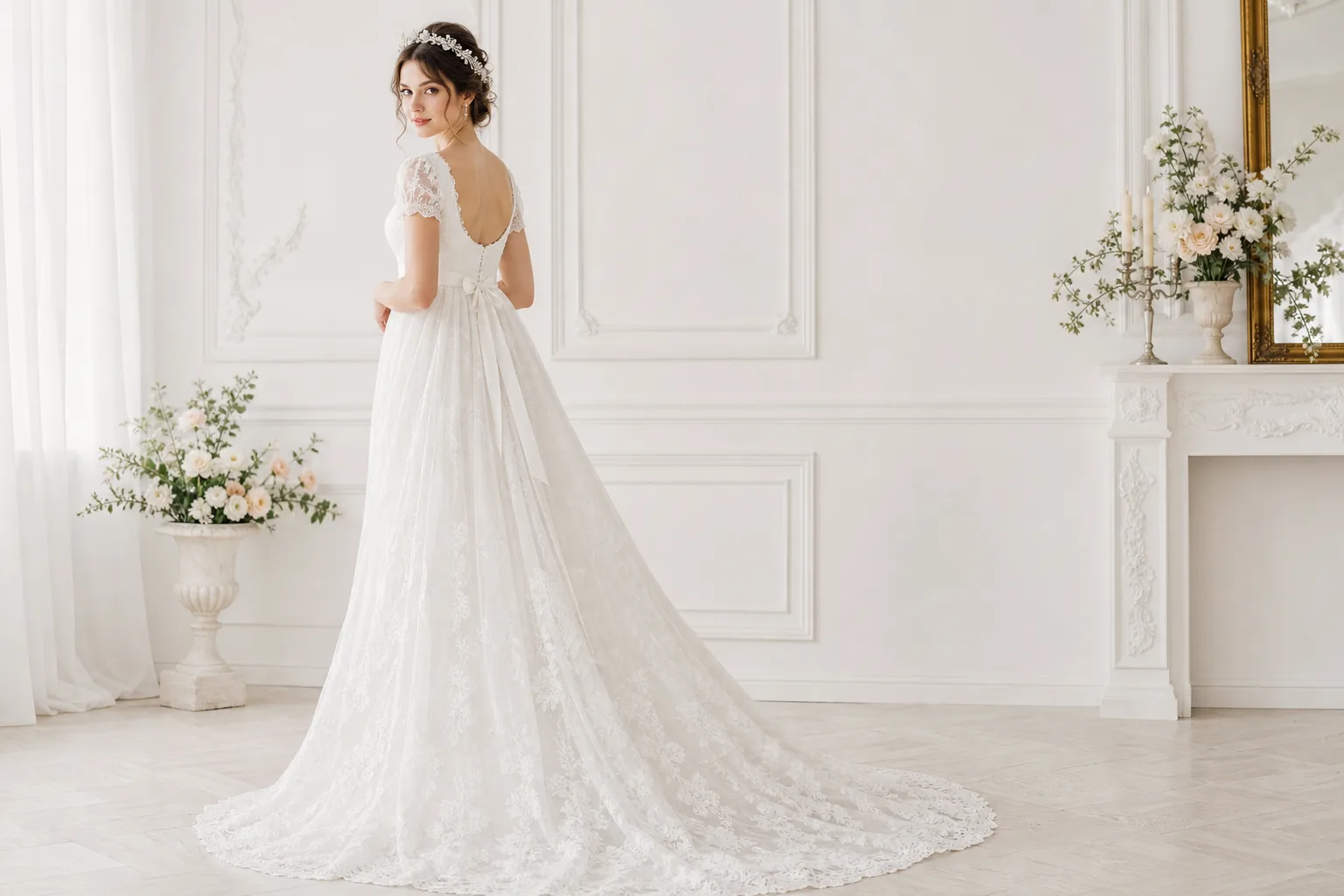
White tones
White Empire Dress
By Bridgerton Dress Editorial
Best Sellers
Ivory and white empire looks.
Light Regency gowns for civil halls, summer events and white-palette dressing.
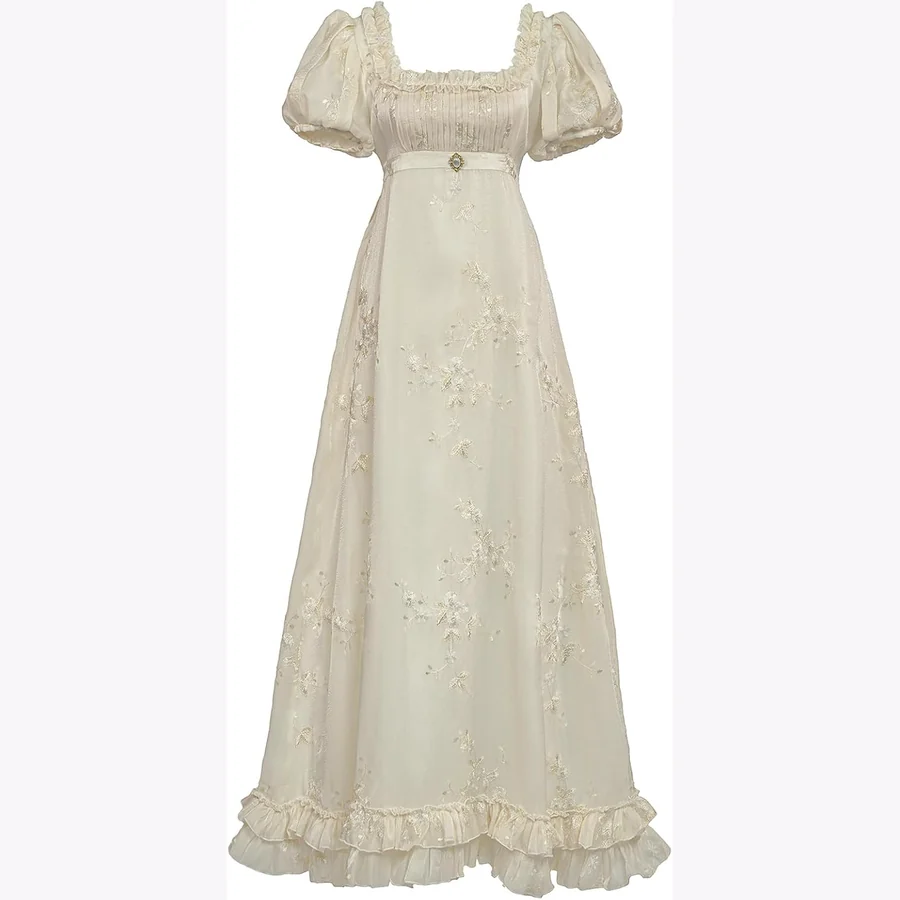
White Ruffle Empire
Pale ruffle-neck empire gown that keeps white Regency looks soft under mixed light.
Check Price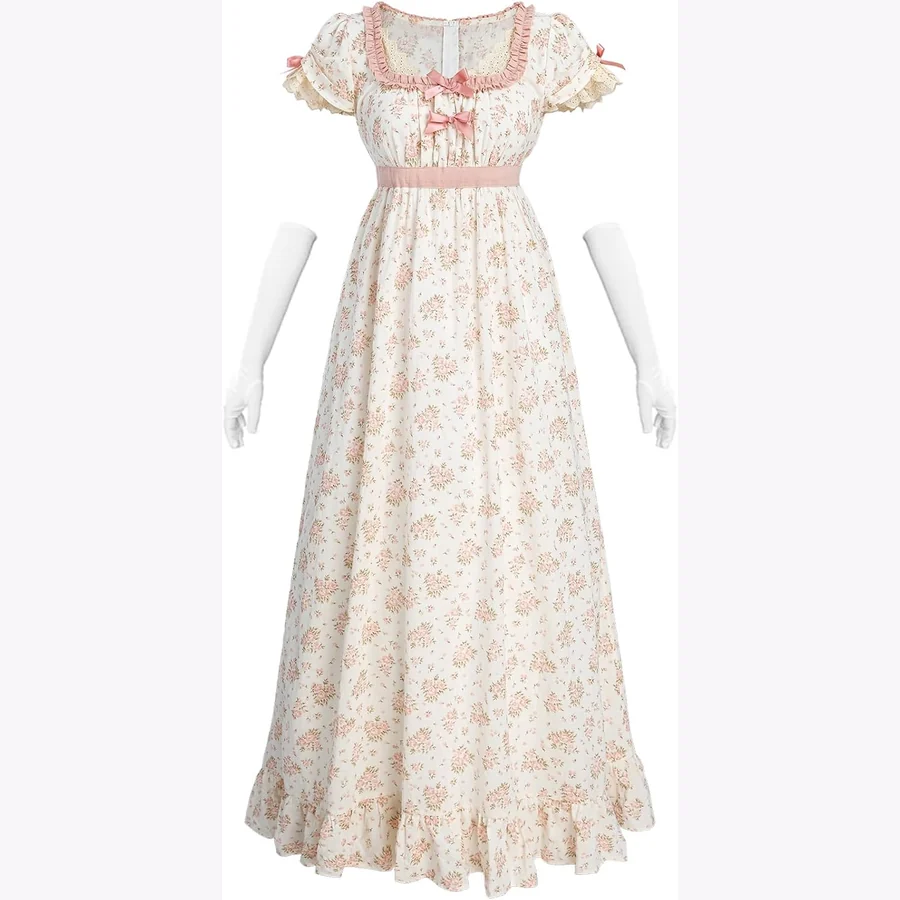
White Floral Empire
Ivory-leaning floral empire dress for light venues and white-palette events.
Check Price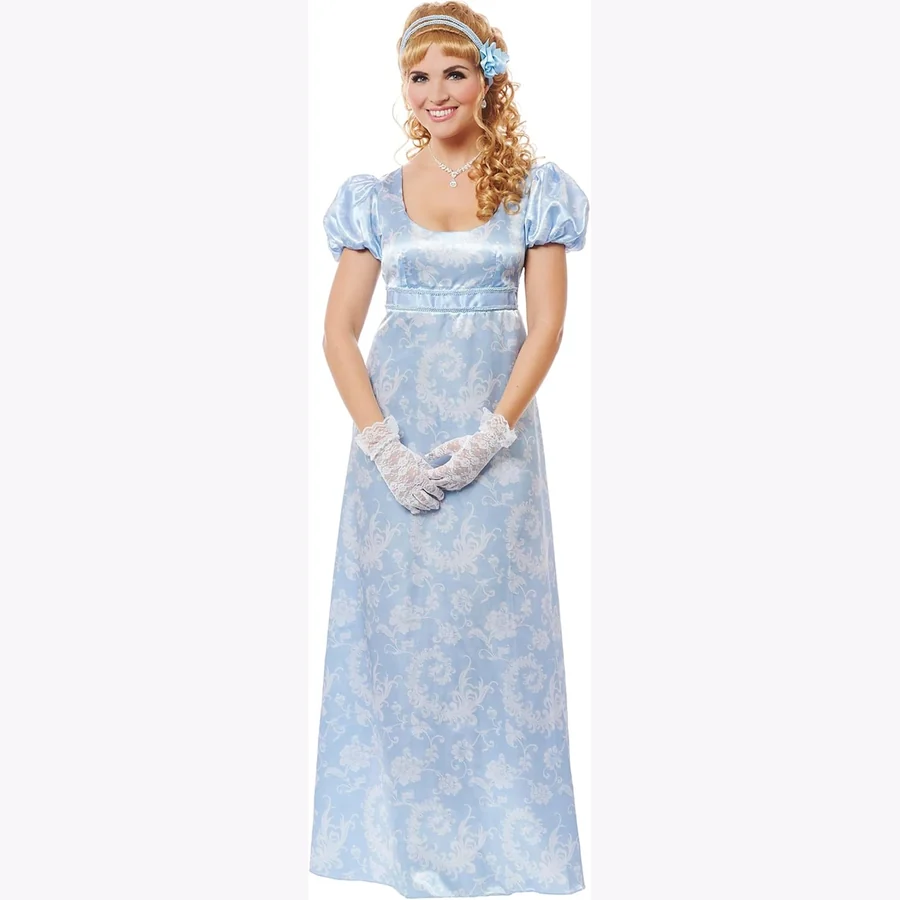
Duchess Satin Gown
Smooth duchess satin Regency gown that photographs cleanly for vows and civil halls.
Check Price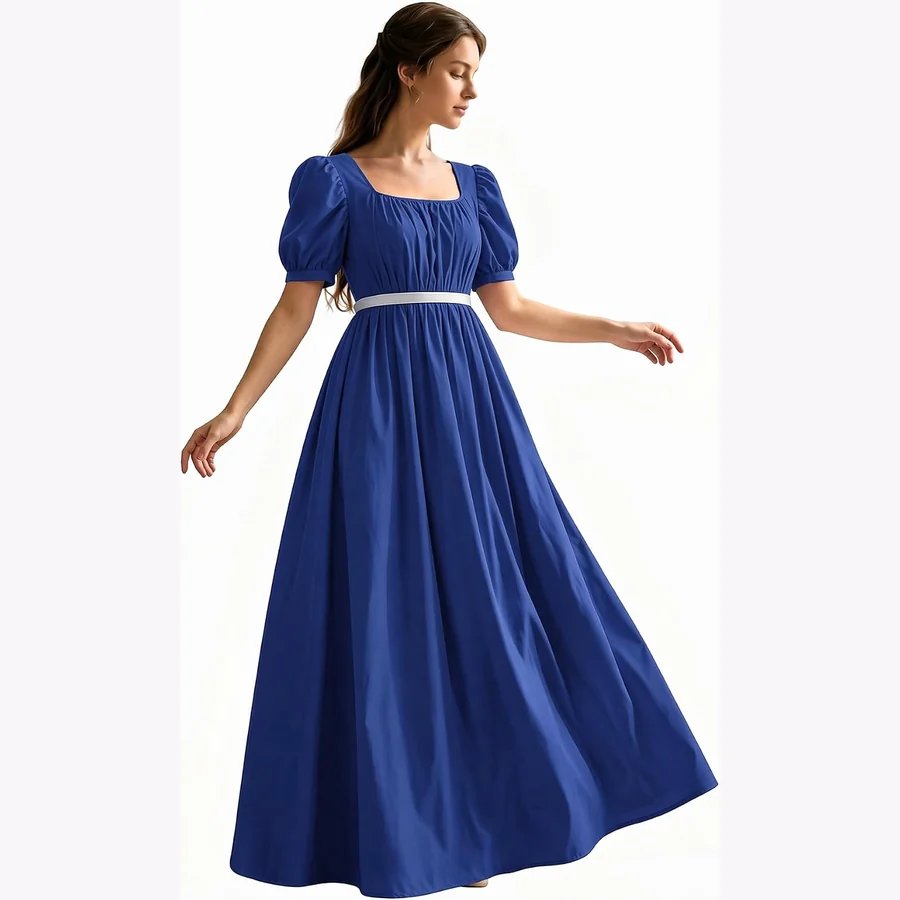
Regency Tea Dress
Satin-ribbon empire dress with puff sleeves, ideal for afternoon tea and light formal events.
Check PriceWhite in a Regency silhouette is a stress test: every lining decision, every photograph angle, and every grass stain proposal shows up with enthusiasm. Start by naming what “white” means to you—true optical white, warm ivory, oyster, candlelight cream—then hold fabric against your skin and against the partner’s outfit before you commit. Registry offices and marquees throw different light; a shade that looks editorial at home can read hospital-cool under cheap LEDs.
Sheer, cups and linings worth paying for
Sheer needs a plan, not hope. Empire bodices with chiffon or georgette overlays require intentional understructure: the right slip colour, the right cup depth, and honest conversation about what should read “ethereal” versus “unintentionally transparent.” If a designer shows a look on a model with specific underlayers, ask which pieces are sold with the dress and which were styling-only.
Linings should be dye-matched to purpose, not only to factory defaults. Contrast linings can flash at side seams or through pale skirts when you sit; patterned linings can checker unexpectedly under flash. Calico toiles are for fit, not final photos—swap to production lining before you trust ceremony light.
Blush stacks, sparkle scale and alfresco grime
Blush and oyster companions appear in the pink guide when you build tone-on-tone stacks of veil, gloves, and shoes. Accessories on the ideas hub help you scale jewellery so crystal does not turn into noise against bright satin.
Outdoor whites collect pollen, grass, and rogue confetti dyes faster than richer colours. Hem treatments—durable-facing second hems, snap-up bustles for garden segments, washable slip layers—matter more than perfect train length that never touches earth. Mud on a satin hem can be managed; unnoticed until the speech photos cannot.
Flash behaviour and needle discipline
Fibres behave differently under flash: acetate-heavy satins glare; matte crepes absorb. Silk blends watermark if mishandled in rain yet photograph with depth polyester sometimes lacks—choose knowingly for your weather forecast and your tolerance for steaming on the day.
Alteration marks show boldly on ivory. Pressing suede on the underside, using the correct needle for each layer, and cleaning machines between dark-fibre appointments are standard asks for good workrooms—if yours hesitates, get a second opinion before cutting.
Trains, itineraries, vintage ivory and editorial mail
Modern wearers crossing white gowns with city commutes find pairing notes on modern Regency styling. Volume and veil geometry tie back to ball-gown chapters when trains enter the conversation.
Readers comparing dry-clean bids, snag repairs, and realistic wear windows share outcomes in reader reviews. Wedding itineraries that hinge on tonal photography sit in wedding notes alongside sequencing for signing rooms versus gardens.
If you inherit a vintage ivory piece, UV age often yellows unevenly—professional assessment beats home bleaching fantasies every time. Document condition before tailoring; insurers and consignors alike prefer timestamped imagery.
Questions about veil opacity, lingerie seams, or shoe dye lots? Mail hello@bridgertondress.co.uk with “white layer” for the editorial inbox—we anonymise horror stories everyone learns from.
Explore more topics
Browse the homepage or the full topics grid.